For more information click here
Friday, November 18, 2011


No Siegfried for Lehman this Season Afterall
 It has just been announced that “Jay Hunter Morris will sing the role of Siegfried in Siegfried on April 21 matinee and April 30, 2012, and in Götterdämmerung on May 3, 2012. He replaces Gary Lehman who has withdrawn due to illness.”
Monday, November 14, 2011
Rodelinda Opens Tonight
Renne Fleming returns to the role of Rodelinda with a stellar cast that includes Stephanie Blythe and Andreas Scholl
For more information click here (Rodelinda Preview)
For more information click here (Rodelinda Preview)
Saturday, November 12, 2011
Met Opera Review: Stellar Cast Compensates for Dull, Safe "Don Giovanni" Production
By David Salazar (For 11.11.11 Performances)
 Mozart's "Don Giovanni" is one of those fascinatingly ambiguous works of art that are endlessly reinterpreted both in an academic and performance context. When a new production is set to come out, there is always a sense of anticipation as to how the events and characters will be portrayed on stage. "What is the new angle?" is generally the question that comes to mind, one which not many of the cornerstones of the operatic repertoire (save for Wagner's works) can really claim to have.
The same question was posed for the Met's latest production by Tony Award Winning Director Michael Grandage. Prior to Grandage's latest attempt, director Marthe Keller offered a relatively conservative approach to the opera in 2004 after 14 years of Franco Zeffirrelli's two visually stunning, but traditional productions. What I mean by conservative in this context is that the stage design and visuals such as costuming and furniture hew closely to the librettist's intentions with regards to time period. Both Zeffirelli and Keller's productions, while different (Keller's staging was less elaborate than Zeffirelli, though no less engaging and satisfactory) essentially gave its audience what is generally expected of this great work. This is by no means a negative comment whatsoever. So naturally a new production means a new direction.
Except that this is not the case. The problem is not that Grandage simply continues that which Zeffirelli and Keller did before them. The problem is that this one lacks the grandiosity of the Zeffirelli or the mood and tone of Keller's. It is simply safe and because of the caution, dull and boring. I can't really blame Grandage for his cautious nature. The Met audience has become rather difficult to please with these new high concept productions (ask Mary Zimmerman about her "Sonnambula") and "Don Giovanni" with its plot filled with rape, violence, and intrigue has been the object of tasteless productions around the world (see Barcelona or Salzburg's productions). But there is certainly great disappointment with the feeling that this conservative production is a step down from what the Met used to have. More importantly, if there was no new idea being expressed about the opera, why get rid of something that already fulfilled the same ideas, and did them better no less. Seems like a pointless exercise in money wasting and certainly not the artistic progress expected from the world's greatest Opera House.
 I would not call Grandage's "Don Giovanni" a bad production. Bad production is one in which the effort looks unfinished and the actors look lost on stage (see this season's new "Anna Bolena"). The problem is that the opera becomes rather bland and predictable. There is no play on any of the characters' ambiguities. There is a certain restraint in all of the aforementioned elements (the violence, sex, and intrigue). This is a Don Giovanni that we have seen again and again. This lack of insight or depth makes me wonder where Grandage's attention was when directing this production, especially when one looks at the production's main attraction and greatest gimmick: the high walls filled with rows and rows of doors that open and close without any really method or direction.
This production had so much potential. After all, this is the story of multiple characters with their own secrets hidden behind doors and closets, things that they may not want other characters to see or know. Add in the fact that we are seeing upwards of 30 doors on stage at the time and you wonder about the possibilities of what could be seen when one opens or closes, etc. Not only a great possibility to depict individual characters, but to create the world. Who else lives behind all those doors? How do they interact with the main characters? An example of this missed opportunity is during Leoporello's "Madamina" aria in Act 1. As he relates the catalog of women that Don Giovanni has loved, the doors open on the left wall to reveal many women. Then the doors on the right do the same. Then the two walls slide off stage and the row of doors in the back does exactly the same exact thing. But the catch here is that we don't really get any emphasis on the text. It is just a random conglomeration of women hanging out and doing nothing. Even worse is that since the doors open without any sense of sequence, the effect loses focus and direction as the viewer is overloaded with too many things happening at once. Maybe one group of women in some sort of order and with different tasks or visual depictions would not only add to Leoporello's narrative and give the audience something to immerse them into the production. Instead, it all looks like superfluous clutter that probably would not have been missed had it not been included. This is all the more frustrating when one considers how distracting this ploy is to the great acting of Luca Pisaroni and Barbara Frittoli in this sequence. At the end of the opera when the remaining characters enter Giovanni's palace to see what has become of him the doors are used in an outrageously distracting and confusing manner. The characters hed down stage and the walls close up the center of the stage behind them and moments later they open up to reveal an empty space. Why they needed to open up again seems pointless considering that if they are to open up there is an anticipation of something revelatory happening. Instead we get an empty space. Essentially they closed the doors to get rid of a table and move the back wall. More importantly, if there was no big reveal at the end, why even bother with the closing and reopening to begin with. The only result is to distract from the gorgeous singing on stage.
Fortunately, there are salvageable aspects of this production. The dances are well choreographed and incorporated into the production. The end of Act 1 and Don Giovanni's manner of escaping the trap set by his enemies is refreshingly exciting. The iconic scene at the end of the opera is also well staged with prostitutes, a drunk Don Giovanni, an attempted rape and the doors are finally put to novel use. AND... there are jets of fire that spit up from the ground.
But I think that the night's greatest remedy was the singing and acting from the stellar cast. And I mean STELLAR. Not one person on stage showed any sign of weakness. Mariusz Kwiecien was the perfect Don Giovanni. Leading the way with a dynamic voice that not only filled the house with its strength, but also drew one in with its suave elegant pianissimo phrases during the famous "Vieni alla Finestra" in Act 2. He seemed invincible moving around with agility and such presence that dwarfed all the other characters around him. This was no evil villain, this was a charismatic "Bad Boy" capable of not only seducing every woman on stage but every audience member into forgetting about his evil nature. The choice to be drunk in the final scene only added to the credibility of this man's lack of fear for death. His inebriation not only of the wine, but of his power made him so arrogant of his godliness that it was only logical for him to have no fear in the face of death. Despite other great performances at the Met, this was Kwiecien's first true star role. Even though he was in jeopardy of missing out completely due to an untimely injury before the premiere, he was able to make it in time for this memorable triumph.
Venezuelan Bass-Baritone Luca Pisaroni was fantastic as Giovanni's sidekick Leoporello. His singing was equally robust and his diction was filled with such a high level precision, an especially important aspect for the comic timing of Leoporello. And make no mistake, he was hilarious throughout the night: Running away from Don Giovanni and then running back for his money like a little lapdog getting his treat; crawling away from the statue; attempting exaggerated poses as Giovanni during the serenading of Donna Elvira. His Leoporello was a perfect foil to Kwiecien's Giovanni: nowhere near as confident or athletic, clumsy, and weak both physically and emotionally. But this only emphasized the master-servant relationship between the two characters. I would have loved to see Pisaroni take the flirting with Donna Elvira in his Act 1 aria further, but this is far from his fault. I put it on Grandage for not pushing him further.
Had the rest of the cast not been equally stellar, Marina Rebeka could have easily stolen the show as Donna Anna. The Latvian Soprano, who made her debut in this role this season, sang with such poise and elegance. Her vocal abilities could never be called into question. In this respect, she seemed invincible. Her demanding coloratura passages were even and fluid and her entire range was effortless and pure. Polished does not even come close to describing her excellent voice. Her acting didn't hurt matters. Her Anna may not have been the most original interpretation (again this is on Grandage for not pushing the subtext), but she had dignity and a sense of strength that dominated all around her. Kwiecien's Don Giovanni dominates the drama, but Rebeka's Anna provides his ideal dramatic counterpart and nemesis.
 Barbara Frittoli's wondrously sung Donna Elvira provides the perfect counterpart to Rebeka's Anna. Her Elvira was powerless and desperate. Elvira's character is often ridiculed for her obsessive nature, but Frittoli, while maintaining the melodramatic nature of the character, gave her character a tragic dimension, singing "Mi Tradi" as if the character was dying of pain and sorrow. Her singing throughout was breathtaking in its level of expressiveness and depth.
Ramon Vargas, the night's Don Ottavio, had one of the most incredible moments I have ever witnessed on the Met Stage when he sang his "Dalla Sua Pace." It is impossible for me to describe how softly he sang the aria, but the entire house went quiet for those few minutes, the orchestra barely audible. All was still as Vargas drew everyone in with his gorgeous pianissimo tone. The moment was ethereal and sublime. Those words are not good enough to describe how fantastical that singing was. His second aria "Il Mio Tesoro" was sung with strength and tremendous breath support. One coloratura passage that most singers separate into two and sometimes three breaths in the middle of the aria was sung here in just ONE breath like a Luigi Alva or Francisco Araiza would have done (major proponents of this role). On this night, Vargas proved that he continues to be one of the most elegant and exciting tenors of today.
I am running out of superlatives for describing the singers. Mojca Erdmann was every bit as remarkable as her counterparts, giving Zerlina naive delicacy while maintaining sweetness and ease in her voice. During her second aria "Vedrai Carino" she added an interpolated high note during the cadenza that was breathtaking in its sweep. She was coquettish and playful in that same scene with Masetto, a sturdy Joshua Bloom. In my Siegfried review, I mentioned that I was excited to see Erdmann in this performance after her impressive interpretation of the Bird in Wagner's epic. She did not disappoint. Stefan Kocan was imposing as Il Commentatore
Louis Langree had the difficult task of filling in not only for James Levine, but for Fabio Luisi who shared the run with Langree. Both Levine and Luisi are high profile conductors noted for their finesse and refinement in this repertoire. But Langree is no slouch and showed that his interpretation of this iconic score was just as powerful. He chose swift tempos throughout adding great propulsion to the lengthy work. However, he never indulged his fast tempos at the expense of the singers. As I stated while relating Vargas' "Dalla Sua Pace," Langree was the ideal collaborator, never rushing or overpowering the singers on stage. However, when given the chance (such as the Final Scene), Langree showed off the orchestra's fortitude with some earth shattering chords.
From a musical standpoint, there was nothing more you could ask for from this performance. And for many, this is a sufficient reason to go to the opera. Under different circumstances, I would have been one of those many. However, since this was a new production, a new approach, a new opportunity to see this masterpiece in refreshing light, I was hoping for some revelation from the production. While it is rather unfortunate that this end of the bargain was once again left unfulfilled (see Siegfried), I was fortunate enough to be able to see new and established stars perform to their fullest and greatest capacities.

The same question was posed for the Met's latest production by Tony Award Winning Director Michael Grandage. Prior to Grandage's latest attempt, director Marthe Keller offered a relatively conservative approach to the opera in 2004 after 14 years of Franco Zeffirrelli's two visually stunning, but traditional productions. What I mean by conservative in this context is that the stage design and visuals such as costuming and furniture hew closely to the librettist's intentions with regards to time period. Both Zeffirelli and Keller's productions, while different (Keller's staging was less elaborate than Zeffirelli, though no less engaging and satisfactory) essentially gave its audience what is generally expected of this great work. This is by no means a negative comment whatsoever. So naturally a new production means a new direction.
Except that this is not the case. The problem is not that Grandage simply continues that which Zeffirelli and Keller did before them. The problem is that this one lacks the grandiosity of the Zeffirelli or the mood and tone of Keller's. It is simply safe and because of the caution, dull and boring. I can't really blame Grandage for his cautious nature. The Met audience has become rather difficult to please with these new high concept productions (ask Mary Zimmerman about her "Sonnambula") and "Don Giovanni" with its plot filled with rape, violence, and intrigue has been the object of tasteless productions around the world (see Barcelona or Salzburg's productions). But there is certainly great disappointment with the feeling that this conservative production is a step down from what the Met used to have. More importantly, if there was no new idea being expressed about the opera, why get rid of something that already fulfilled the same ideas, and did them better no less. Seems like a pointless exercise in money wasting and certainly not the artistic progress expected from the world's greatest Opera House.
 I would not call Grandage's "Don Giovanni" a bad production. Bad production is one in which the effort looks unfinished and the actors look lost on stage (see this season's new "Anna Bolena"). The problem is that the opera becomes rather bland and predictable. There is no play on any of the characters' ambiguities. There is a certain restraint in all of the aforementioned elements (the violence, sex, and intrigue). This is a Don Giovanni that we have seen again and again. This lack of insight or depth makes me wonder where Grandage's attention was when directing this production, especially when one looks at the production's main attraction and greatest gimmick: the high walls filled with rows and rows of doors that open and close without any really method or direction.
This production had so much potential. After all, this is the story of multiple characters with their own secrets hidden behind doors and closets, things that they may not want other characters to see or know. Add in the fact that we are seeing upwards of 30 doors on stage at the time and you wonder about the possibilities of what could be seen when one opens or closes, etc. Not only a great possibility to depict individual characters, but to create the world. Who else lives behind all those doors? How do they interact with the main characters? An example of this missed opportunity is during Leoporello's "Madamina" aria in Act 1. As he relates the catalog of women that Don Giovanni has loved, the doors open on the left wall to reveal many women. Then the doors on the right do the same. Then the two walls slide off stage and the row of doors in the back does exactly the same exact thing. But the catch here is that we don't really get any emphasis on the text. It is just a random conglomeration of women hanging out and doing nothing. Even worse is that since the doors open without any sense of sequence, the effect loses focus and direction as the viewer is overloaded with too many things happening at once. Maybe one group of women in some sort of order and with different tasks or visual depictions would not only add to Leoporello's narrative and give the audience something to immerse them into the production. Instead, it all looks like superfluous clutter that probably would not have been missed had it not been included. This is all the more frustrating when one considers how distracting this ploy is to the great acting of Luca Pisaroni and Barbara Frittoli in this sequence. At the end of the opera when the remaining characters enter Giovanni's palace to see what has become of him the doors are used in an outrageously distracting and confusing manner. The characters hed down stage and the walls close up the center of the stage behind them and moments later they open up to reveal an empty space. Why they needed to open up again seems pointless considering that if they are to open up there is an anticipation of something revelatory happening. Instead we get an empty space. Essentially they closed the doors to get rid of a table and move the back wall. More importantly, if there was no big reveal at the end, why even bother with the closing and reopening to begin with. The only result is to distract from the gorgeous singing on stage.
Fortunately, there are salvageable aspects of this production. The dances are well choreographed and incorporated into the production. The end of Act 1 and Don Giovanni's manner of escaping the trap set by his enemies is refreshingly exciting. The iconic scene at the end of the opera is also well staged with prostitutes, a drunk Don Giovanni, an attempted rape and the doors are finally put to novel use. AND... there are jets of fire that spit up from the ground.
But I think that the night's greatest remedy was the singing and acting from the stellar cast. And I mean STELLAR. Not one person on stage showed any sign of weakness. Mariusz Kwiecien was the perfect Don Giovanni. Leading the way with a dynamic voice that not only filled the house with its strength, but also drew one in with its suave elegant pianissimo phrases during the famous "Vieni alla Finestra" in Act 2. He seemed invincible moving around with agility and such presence that dwarfed all the other characters around him. This was no evil villain, this was a charismatic "Bad Boy" capable of not only seducing every woman on stage but every audience member into forgetting about his evil nature. The choice to be drunk in the final scene only added to the credibility of this man's lack of fear for death. His inebriation not only of the wine, but of his power made him so arrogant of his godliness that it was only logical for him to have no fear in the face of death. Despite other great performances at the Met, this was Kwiecien's first true star role. Even though he was in jeopardy of missing out completely due to an untimely injury before the premiere, he was able to make it in time for this memorable triumph.
Venezuelan Bass-Baritone Luca Pisaroni was fantastic as Giovanni's sidekick Leoporello. His singing was equally robust and his diction was filled with such a high level precision, an especially important aspect for the comic timing of Leoporello. And make no mistake, he was hilarious throughout the night: Running away from Don Giovanni and then running back for his money like a little lapdog getting his treat; crawling away from the statue; attempting exaggerated poses as Giovanni during the serenading of Donna Elvira. His Leoporello was a perfect foil to Kwiecien's Giovanni: nowhere near as confident or athletic, clumsy, and weak both physically and emotionally. But this only emphasized the master-servant relationship between the two characters. I would have loved to see Pisaroni take the flirting with Donna Elvira in his Act 1 aria further, but this is far from his fault. I put it on Grandage for not pushing him further.
Had the rest of the cast not been equally stellar, Marina Rebeka could have easily stolen the show as Donna Anna. The Latvian Soprano, who made her debut in this role this season, sang with such poise and elegance. Her vocal abilities could never be called into question. In this respect, she seemed invincible. Her demanding coloratura passages were even and fluid and her entire range was effortless and pure. Polished does not even come close to describing her excellent voice. Her acting didn't hurt matters. Her Anna may not have been the most original interpretation (again this is on Grandage for not pushing the subtext), but she had dignity and a sense of strength that dominated all around her. Kwiecien's Don Giovanni dominates the drama, but Rebeka's Anna provides his ideal dramatic counterpart and nemesis.
 Barbara Frittoli's wondrously sung Donna Elvira provides the perfect counterpart to Rebeka's Anna. Her Elvira was powerless and desperate. Elvira's character is often ridiculed for her obsessive nature, but Frittoli, while maintaining the melodramatic nature of the character, gave her character a tragic dimension, singing "Mi Tradi" as if the character was dying of pain and sorrow. Her singing throughout was breathtaking in its level of expressiveness and depth.
Ramon Vargas, the night's Don Ottavio, had one of the most incredible moments I have ever witnessed on the Met Stage when he sang his "Dalla Sua Pace." It is impossible for me to describe how softly he sang the aria, but the entire house went quiet for those few minutes, the orchestra barely audible. All was still as Vargas drew everyone in with his gorgeous pianissimo tone. The moment was ethereal and sublime. Those words are not good enough to describe how fantastical that singing was. His second aria "Il Mio Tesoro" was sung with strength and tremendous breath support. One coloratura passage that most singers separate into two and sometimes three breaths in the middle of the aria was sung here in just ONE breath like a Luigi Alva or Francisco Araiza would have done (major proponents of this role). On this night, Vargas proved that he continues to be one of the most elegant and exciting tenors of today.
I am running out of superlatives for describing the singers. Mojca Erdmann was every bit as remarkable as her counterparts, giving Zerlina naive delicacy while maintaining sweetness and ease in her voice. During her second aria "Vedrai Carino" she added an interpolated high note during the cadenza that was breathtaking in its sweep. She was coquettish and playful in that same scene with Masetto, a sturdy Joshua Bloom. In my Siegfried review, I mentioned that I was excited to see Erdmann in this performance after her impressive interpretation of the Bird in Wagner's epic. She did not disappoint. Stefan Kocan was imposing as Il Commentatore
Louis Langree had the difficult task of filling in not only for James Levine, but for Fabio Luisi who shared the run with Langree. Both Levine and Luisi are high profile conductors noted for their finesse and refinement in this repertoire. But Langree is no slouch and showed that his interpretation of this iconic score was just as powerful. He chose swift tempos throughout adding great propulsion to the lengthy work. However, he never indulged his fast tempos at the expense of the singers. As I stated while relating Vargas' "Dalla Sua Pace," Langree was the ideal collaborator, never rushing or overpowering the singers on stage. However, when given the chance (such as the Final Scene), Langree showed off the orchestra's fortitude with some earth shattering chords.
From a musical standpoint, there was nothing more you could ask for from this performance. And for many, this is a sufficient reason to go to the opera. Under different circumstances, I would have been one of those many. However, since this was a new production, a new approach, a new opportunity to see this masterpiece in refreshing light, I was hoping for some revelation from the production. While it is rather unfortunate that this end of the bargain was once again left unfulfilled (see Siegfried), I was fortunate enough to be able to see new and established stars perform to their fullest and greatest capacities.
Friday, November 11, 2011
Notable CD and DVD releases for the month of November
November brings some of the most interesting releases by the most glamourous opera stars working today.


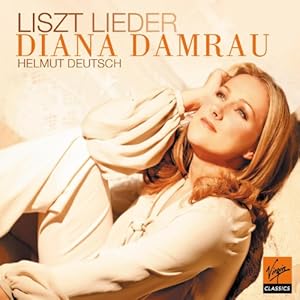
Diana Damrau's followup album features the works of Liszt. These lieder works by Liszt are little known and as a result should make for a revealing experience.
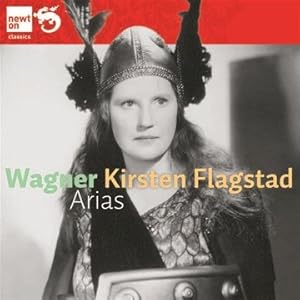
Rare recordings of legendary Wagnerian Kirsten Flagstad appear for the first time on CD. The album features scenes from her signature roles including Brunhilde and Isolde.
The incomparable soprano Marlis Petersen reveals her most vulnerable side in this new production of La Traviata. The production by Peter Konwitschny may not appeal to conservative opera viewers but Petersen is a performer not to be missed.
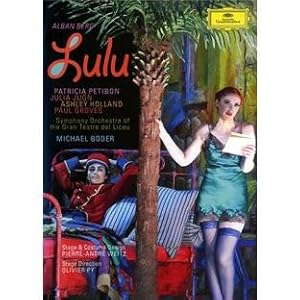
The leading Lulu of our time Patricia Petibon reveals her darkest side in this new DVD released by Deutshe Grammophon. Michael Boder conducts the Liceu orchestra with passion and intimacy.
Controversial director Calixto Bieito brings eroticism to Bizet's Carmen. The extraordinary cast features the legendary Beatrice Uria-Monzon, Robert Alagna, rising star Marina Poplavskaya and Erwin Schrott.
The Metropolitan opera releases Renee Fleming's thrilling Capriccio conducted by one of the world's greatest conductors Andrew Davis.
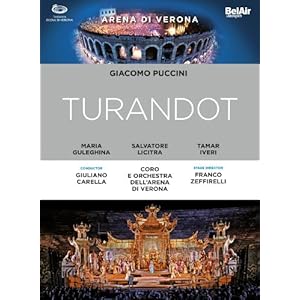
Maria Guleghina and the late Salvatore Licitra bring their Chemistry to Franco Zeffirelli's Turandot. Live from Verona the DVD features Licitra at the height of his powers and an encore of opera's most famous Aria, "Nessun Dorma".
Salzburg Festival announces 2012 lineup
Today the Salzburg Festival announced their program for 2012. The festival includes some of the worlds most exciting artists inlcuding the Anna Netrebko (La Boheme), Elina Garanca (Verdi Requiem), Jonas Kaufmann (Carmen, Ariadne Auf Naxos &Verdi Requiem), Rene Pape (Verdi Requiem), Rolando Villazon (Il Re Patore), Placido Domingo (Tamerlano), and Cecilia Bartoli (Giulio Ceasare).


 Recitals
Here is the full lineup
Staged opera:
- Mozart: Die Zauberflöte (Felsenreitschule) (Concentus Musicus Wien, Conductor: Nikolaus Harnoncourt, Director: Jens-Daniel Herzog, cast: Georg Zeppenfeld, Bernard Richter, Mandy Fredrich, Julia Kleiter, Sandra Trattnigg, Anja Schlosser, Wiebke Lehmkuhl, Tölzer Knaben, Markus Werba)
- Peter von Winter: Das Labyrinth oder der Kampf mit den Elementen(Residenzhof) (Mozarteumorchester Salzburg, Conductor: Ivor Bolton, Director: Alexandra Liedtke, cast: Christof Fischesser, Julia Novikova, Malin Hartelius, Michael Schade)
- Strauss: Ariadne auf Naxos (Wiener Philharmoniker, Conductor: Riccardo Chailly, Director: Sven-Eric Bechtolf, cast: Christof Fischesser, Emily Magee, Elena Moșuc, Eva Liebau, Marie-Claude Chappuis, Eleonora Buratto, Jonas Kaufmann, Roberto Saccà)
- Puccini: La Bohème (Wiener Philharmoniker, Conductor: Daniele Gatti, Director: Damiano Michieletto, cast: Piotr Beczala, Anna Netrebko, Massimo Cavalletti, Nino Machaidze, Alessio Arduini, Carlo Colombara, Davide Fersini)
- Bernd Alois Zimmermann: Die Soldaten (Wiener Philharmoniker, Conductor: Ingo Metzmacher, Director: Alvis Hermanis, cast: Alfred Muff, Laura Aikin, Tanja Ariane Baumgartner, Cornelia Kallisch, Tomasz Konieczny, Stefanie Kaluza, Reinhard Mayr, Daniel Brenna, Wolfgang Ablinger-Sperrhacke, Boaz Daniel)
- Bizet: Carmen (Wiener Philharmoniker, Conductor: Simon Rattle, Director: Aletta Collins, cast: Magdalena Kožená, Jonas Kaufmann, Kostas Smoriginas, Genia Kühmeier, Christian van Horn, Andrè Schuen, Christina Landshamer, Rachel Frenkel). First seen at the Easter Festival.
- Handel: Giulio Cesare in Egitto (Giardino Armonico, Conductor: Giovanni Antonini, Director: Moshe Leiser and Patrice Caurier, cast: Andreas Scholl, Cecilia Bartoli, Anne Sofie von Otter, Philippe Jaroussky, Christophe Dumaux, Jochen Kowalski). First seen at the Whitsun Festival.
/Features/ONAwardsKaufmannlg311.jpg)
Opera in concert:
- Handel: Tamerlano (Musiciens du Louvre, Conductor: Marc Minkowski, cast: Bejun Mehta, Plácido Domingo, Julia Lezhneva, Franco Fagioli, Marianne Crebassa, Michael Volle)
- Mozart: Il Re Pastore (Orchestra La Scintilla, Conductor: William Christie, cast: Rolando Villazón, Martina Janková, Eva Mei)
Verdi Requiem- Jonas kaufmann,Anja Harteros, Elīna Garanča and René Pape, Daniel Barenboim

from Elīna Garanča, Magdalena Kožená, Thomas Hampson, Christian Gerhaher, Matthias Goerne, Thomas Quasthoff, Juan Diego Flórez and José Carreras.
Tuesday, November 8, 2011
Faust Preview 2011-12

The Production
Des McAnuff makes his Met debut in a production that premiered at the English National Opera. McAnuff's concept is to update Faust to the first half of the twentieth century. Faust is not just a romantic lover but also a scientist. In the production Faust travels back in time in order to try and relive his life. He goes back and sees the two World Wars. Although his pact with the Devil is overcome by his love, he still meets with death in the final moments of McAnuff's production, which return us to the gloomy laboratory of the opening scene. When the production premiered in September 2010, the production received mixed reviews. Critics stated that the production for not asking questions and for being too safe. In addition they stated that the weakest part of the production are the set pieces such as the waltzes and chorus ensembles making the production theatrically disappointing.
While the production may not have been a total successful at the English National Opera, the Met has put together a thrilling cast.
Jonas Kaufmann leads the cast with his smoldering lyric tenor. After triumphing in Siegmund, Kaufmann returns to the lyric repertoire to show his versatility. Kaufmann is known for his Italian, French and German repertoire and he has already triumphed in Tosca and Carmen at the Met as well as Travaita. Kaufmann hasn't sung Faust in years but he possesses the right voice for the role. His voice while dark has a solid middle register, and booming top notes. He is capable of producing subtle pianissmos and thrilling high notes thus phrasing like the tenors of the golden age. In addition to his voice Kaufmann is a committed actor capable of bringing audiences to many emotional states. He should be a successful Faust.


Robert Alagna and Joseph Calleja take over in January. Alagna no longer has the top register or heft to play Faust. However he specializes in French which is a plus because he knows the style of the music. The last time he sang Faust Alagna was hailed for his ardent singing but critics did note that he was vocally uneven. He may not be a polished Faust but acting wise he will be incredible.Joseph Calleja has one of the most beautiful voices to appear in the last decade. His voice is a lyrical voice with beautiful ringing high notes. His phrasing is subtle and his singing provides energy and charisma. However he has yet to demonstrate why he is one of the promising tenors of the future. In addition he is unable to express emotions and his acting lacks energy. However, I am sure Calleja will be a vocally successful Faust if nothing else.

Marina Poplavskaya once again benefits from Angela Gheorghiu's Diva behavior. Gheorghiu who was originally scheduled for the opera, withdrew because she was artistically against the production. As a result Poplavskaya was given the task to sing Marguerite. Poplavskaya made a name for herself last year when she took on none other two Verdi heroines, Violetta in La Traviata and Elisabetta in Don Carlo. Poplavskaya possesses a spinto soprano. She does not have a natural french or Italianate voice that most are used to. Instead her voice can sound strident at times and metallic. However it has warmth in her middle and lower register something that helps for the role of Marguerite. Her top range is sometimes insecure and her coloratura is sloppy. Marguerite may not be a coloratura soprano role but it is a lyric role which requires security at the top. The major question is can Poplavskaya bring depth and warmth to Marguerite as well as emotion. This is something Poplavskaya lacks even though she is a brilliant actress. She can be cold at times. Having seen her in Don Carlo she was static and looked bored. Can Poplavskaya finally launch her stardom this year or will she simply remain an understudy for sopranos like Gheorghiu.

Rising stars Kate Lindsay, Michele Losier, Russell Braun and George Petean round out the cast in the roles of Valentin and Siebel. They should make for youthful incarnations of the roles.
Conclusion
The cast should make for a pleasant night even if the production is a let down.
This is part of the live in HD transmissions at the Met. DECCA will most release this production.
Subscribe to:
Posts (Atom)