A few weeks ago, the Met opened Gaetano Donizetti's first major hit opera Anna Bolena for the first time on it's stage. I attended the October 6th performance starring opera's brightest star Anna Netrebko in addition to some other notable cast members.
The most notable of the performance's components is its new production by one of the Met's superstar directors, David McVicar who made his debut in a successful Trovatore a few seasons ago. His success was so great that Peter Gelb, ever the enthusiast not only signed McVicar up to direct the Met premiere of Anna Bolena, but also the other two Donizettis operas that comprise the "Queens" trilogy and Handel's Giulio Cesare. McVicar's directing style is essentially conservative in its stance, respecting the composer and librettists intentions, but often adding some interesting theatrical devices to energize the works. In Trovatore, it was a turntable on which the scenery rotated, enabling the opera's propulsive tempo to flow without disruption. Before the opening of Bolena, McVicar promised a traditional approach to Donizetti's work, and there is no doubt that for the most part, he came through. As far as the wardrobe (the production's finest element) is concerned. And also as far as the setting is concerned (the opera is still set in a palace, albeit one that is made up of gray squared walls). And he also delivers as far as the "traditional" outlook on opera staging is concerned. This final point is likely the most important considering Peter Gelb's constant emphasis in interviews on his attempts to make his new productions "more theatrical experiences." Ever since he has taken the helm as general manager, I have constantly asked myself what he means by this? Acting is often the point of contention in this matter. Gelb and other proponents of the "theatrical opera" movement, have often been quick to assert that in the past, opera was a bunch of singer's standing around on lavish productions. If this be the case, then what exactly makes McVicar's production a theatrical production? What makes it different enough that Gelb would open his wallet and give McVicar a blank check to make his new Anna Bolena?
I won't give a definitive answer, until I have described a few points about the production. As the opera opens, we are introduced to a dark scene where a lot of chorus members stand around in a clutter. They pretty much stay locked in their spot, with the occasional person coming in and out at seemingly random moments for the remainder of the scene. The lone exception is Anna Bolena. During the pezzo concertato at the end of the Act, the set is split in two halves by a wall, during which the massive chorus clutters the back and sides of the stage (with the occasional person coming on and off stage) and the principles all stand firmly at the footlights. The lone exception is Anna Bolena who moves around looking for an escape. Act 2, really doesn't change much, as the majority of the cast and chorus spend the majority of the time locked in place. Again, the only exception is Anna Bolena. It would be easy to criticize McVicar's inefficient, bored use of the chorus, but he is not the only theater-turned-opera director who doesn't know what to do with a chorus. Last year's Don Carlo, directed by Nicholas Hytner was plagued by a chorus standing around looking lost on stage. A few years ago, the Met's Peter Grimes suffered from the same deficiency. I am not stating that all directors are inefficient in this regard, but McVicar's Bolena is a prime example of unoriginal work. What makes the matter worse is that the set lacks any sense of depth. It is a single flat surface, decorated by large flats and some representations of windows and torches. Aside from that, the entire stage is lacking in any form of furniture or elaboration. This lack of elaboration makes it difficult to truly get a grasp on the world of the story and the inconsistent use of space (Seymour being able to walk around the wall that blocks off Bolena's room at the end of Act 1), makes the set come off as unfinished and lazy work. It is no wonder that the chorus looks lost throughout and that the movements are almost non-existent, making any sense of character or story mute, save for the text that they are singing. Is this really the theatricality that Gelb is spending his money on? Is it really better than those elaborate Zeffirelli productions (which are at the forefront of criticism of "traditional" productions) that place too much importance on the visuals and none on the characters? If I recall correctly, his Boheme production, with it's beautiful rendition of a Parisian street in Act two, is built on multiple levels with elaborate furniture and perceptible locations as to add dimension to the world of the story. Furthermore, this depth and detail is not only limited to scenery as it is clear viewing said production that every single person on stage is alive as a character. The counterargument would be that minimalist theater enables the audience to work their imagination. However, there is no desire to work the imagination for the viewer, when it is clear that the performers onstage are not fully engaged with their world as is the case with McVicar's production.
All this rambling about inefficient use of chorus and set design would be pointless if not for the fact that it leads to a dull, uneventful performance. Donizetti's music is inconsistent and the libretto meanders a bit, particularly at the start of the opera, and this production's lack of life both in the acting and scenery (and lighting which is flat throughout, instead of the sharp contrast the poster hints at) only serves to emphasizes its deficiencies (conductor Marco Armiliato doesn't help, but more on that later).
I have yet to make mentions about the principles, though I have constantly referenced Anna Bolena as the lone sense of movement and energy in the performance. Anna Netrebko, who performed the iconic soprano role, has long been a fixture of the opera world as not only a strong singer, but an electrifying actress. It is rare to see her give a performance lacking in both of these elements, but last night happened to be one of them. Her singing was riveting and sublime for most of the night as she swept through the mountainous difficulties of this role with ease and fluidity. Even when she seemed to run out of breath on a top note, she was able to recuperate with no sign of fatigue or insecurity. It was thrilling and chilling performance. However, her acting, which is generally her strong suit, was not on full display here, but to no fault of her own. She constantly looked for an outlet onto which she could pour her pent up energy, moving around the staging attempting to interact with her surroundings and cast members, but there was no one there for her. That isn't to say that the other principles were not engaged (some of them weren't), but they too seemed lost and reverted to familiar/stock operatic arm gestures (raising the arm in a fistlike manner to denote strength, raising arms to the heavens, etc) to "act" their way through the night. King Enrico, played/sung by Ildar Abadrazakov and his coarse and suprisingly bored bass, reverted to the arm gestures a bit too often to denote his strength and control. Stephen Costello and his beautiful, but inconsistent tenor also looked lost, often taking Netrebko's lead to get through their scenes together. His upper range seems to lack any sort of stability often sound shrill and uneasy. His mid/lower range however is another matter completely. It is suave, elegant, and potent. His saving grace is that he is still young and may be able to stabilize his upper range in years to come. Ekaterina Gubanova was an inconsistent Giovanna Seymour though she was announced as suffering from illness. Her singing in the first act was labored, with her upper notes coming off as wobbly and insecure. Her second act duet with Bolena was another manner, introducing a Gubanova that was not only in control vocally, but was able to deliver a strong sense of emotion in her singing. Aside from Netrebko, Tamara Mumford was the night's best performance. Mumford has a gorgeous, steady, and delicate mezzo that never sounded uncomfortable or strained. She is a singer to look out for in coming seasons. Eduardo Valdes, Sir Hervey, and Keith Miller, Lord Rochefort, were serviceable in their minor roles.
Marco Armiliato proved to be the night's biggest disappointment. I have stated the blandness of the production, but nothing sounded more uninterested than the Met orchestra on this night. There was no sense of energy or commitment in the music making, with the tempi being either overly slow and labored, or excessively fast and inconsiderate with the singers. This inconsistency only lessened the effect of the score adding to the aforementioned lack of dramatic force and propulsion. I was never awed by the variety of colors in Donizetti's score, as they were rarely explored or emphasized.
Save for some heroics from a few cast members, this performance, which should have been monumental and historic, felt routine. Rather than being the evolution of "traditional" opera productions toward greater theatricality, this production felt like an amateur production by a smaller company who tried to protect its funds rather than its artistic integrity.
Don Giovanni receives a new production starring two the most acclaimed baritones Mariusz Kwiecien and Gerald Finley.
The Production
Michael Grandage makes his met debut in a highly stylized but traditional production. From the pictures Grandage's production consists of doors staked on top of each other with staircases. Grandage states "that Don Giovanni is a dark, complex individual and that Mozart takes us to a play about of life." The sets and costumes are by Christopher Oram and the lighting is by Paule Constable. More on the production when we review it.
The Cast
Mariusz Kwiecien makes his Met role debut in Don Giovanni a role he has triumphed in over the past few years. Kwiecien has a lyric voice which allows him the flexibility to sing coloratura and fast notes. However over the past years he has sung roles too heavy for his voice. Last year he return to the role of Malatesta, a role that suits him well and which he triumphed in. While the role of Don Giovanni is a bit heavy Kwiecien has proved that he is up to the challenge. When he last sang the role at the Covent Garden he was hailed for his excellent singing. In addition when he sang the role at Seatle he was hailed for commanding the stage. Kwiecien is truly a great actor who has the ability of seducing his colleagues and the audience alike. Kwiecien has the ability of becoming the next great Don Giovanni following a list of legendary singers.
Gerald Finley returns to the Met after a successful Pelleas et Melisande. Finley who is well known for his Giovanni as he has sang it all over the world including at the Met in 2005. His Giovanni interpretation was just release by EMI, so this will give audiences the opportunity to see his interpretation before they go to the Met. When he sang the role last in 2005 he was hailed for his physicality and his well cultured voice. Finley will most likely be as great as he was 6 years as his voice and artistry have grown.
Marina Rebeka makes her Met debut in the role of Donna Anna. Rebeka has a light lyric coloratura voice that is capable of dispatching some of the hardest coloratura arias. As a result it is with no surprise that she will be suitable to Anna. I have never heard any her on stage but from recordings her voice has an amazing range with a flexibility like no other working today. We will see how she is received on the 13th of October.
Barbara Frittoli returns to the role of Donna Elvira, a role she sang in 2009 at the Met when she made her role debut. Frittoli's voice in recent years has become darker and wobblier. She possesses a lyric voice that is able to produce beautiful colors. However as she reaches her high range she tends to go flat and wobble. Elvira is a heavy role that requires heft. When she made her Role debut critics became concerned that she became pitchy and harsh. In addition when I saw her she sounded nervous and her voice was unstable. However having settled into the role and two years passing, Frittoli could possibly have resolved some of the vocal issues she had when she first sang the role.
Ramon Vargas and Matthew Polezani share the role of Don Ottavio. Both tenors possess lyric voices that specialize in the bel canto repertoire. However Vargas has slowly turned from the lyric repertoire to the heavier spinto roles, a choice that has weakened his voice. He stills retains the finesse and technique but his voice has become smaller and more fragile. Polenzani on the other hand has remained in the lyric repertoire and triumphing in roles such as Ernesto in Don Pasquale. His voice is more beautiful than ever and his phrasing is better than ever. Both should make for appealing Ottavios.
Luca Pisaroni, an enticing young Bass-baritone has triumphed as Leporelli all over the world. Most recently he recorded the role in Baden Baden with Rolando Villazon and he is in the EMI recording with Gerald Finley. When he sang at Glyndebourne he was hailed for his stage presence and personality. They raved about his expansive and big voice. After a series of smaller Mozart roles this should be his breakout role at the Met.
Mojca Erdmann and Isabel Leonard take on the role of Zerlina. Both have specialized in Mozart and will have different take on this role. Erdmann who has been hailed in the role of Zerlina and who also recorded the role with Rolando Villazon, has a light lyric voice and a big range. In her most recent Opera News interview she states that Zerlina's arias are simple but very true and deep. "She is very honest." Leonard has already sang the role at the Met and the last time she sang it, she was hailed for her innocence, fresh and lovely singing. After having made her role debut of Rosina in the Barber of Seville this year, her voice has gained more flexibility and heft. This is should make for even more power and volume in the role of Zerlina. Both young singers should be appealing choices in the role of Zerlina.
James Morris should add star power to the cast and Joshua Bloom returns to the role of Massetto.
Conclusion
A good production with a youthful cast could make for one of the most memorable evenings at the Met this year.
It has been confirmed that Marcelo Alvarez will be singing the role of Riccardo/ Gustavo at the Met in Un Ballo in Maschera in the 2012-2013 season. According to Alvarez's schedule the opera will be performed in October of 2012.
This month many exciting releases come our way from the top stars in Opera.
One of the curious releases is from the Netherlands opera. They release their first Vespri Siciliani in french. The production by Christof Loy is modern and therefore many used to the Parma and La Scala productions may be dissuaded to purchase it. However the cast is incredible and deserves a look at.
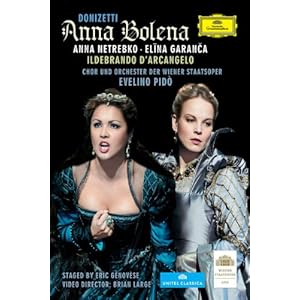
Anna Nterebko's tragic take on Anna Bolena is released. The cast also includes the spellbinding Elina Garanca and Ildebrando d'Arcangelo. The performance from April 2011 features Netrebko in her role debut conducted by Bel canto specialist Evelino Pido.
Twenty years have passed since this memorable performance of Andrea Chenier which includes Pavarotti, a youthful Guleghina and an imposing Pons. A must have in all DVD collections.
Diva Angela Gheorghiu brings homage to Maria Callas in an album that includes some of Callas' favorite works and Gheorghiu's. The CD conducted by Marco Armiliato includes works by Puccini and Verdi as well as others.
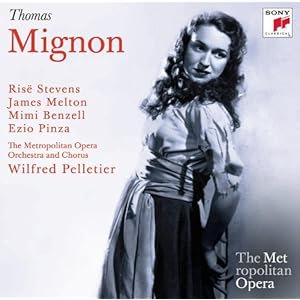
The Met releases four more legendary performances of L'Contes d'Hoffman, La Fille du Regiment, Carmen and Mignon featuring some of the greatest singers including Lily Pons, Richard Tucker, Rise Stevens, and Enzo Pinza.
After a thrilling opening night at the Met, I want to pose the inevitable question, which performance is better, the Vienna or the Met performance? And which really deserved the DVD release?
Here are some videos to make your opinions.
Please comment. I would really love to hear what you think in terms of cast, production and of course Ms. Netrebko